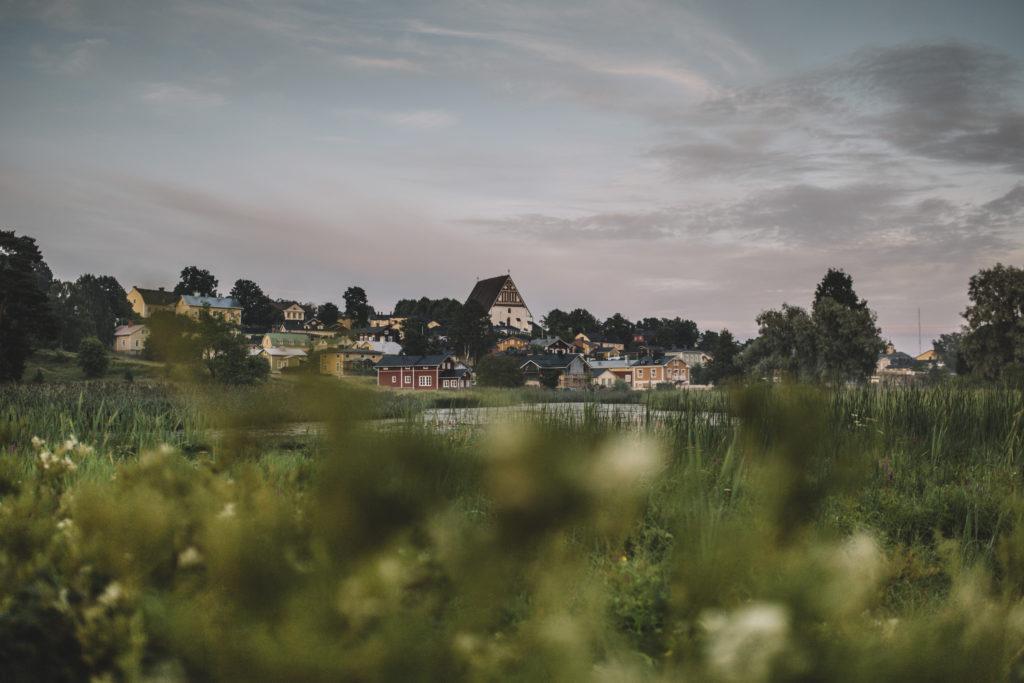
Askola
Askola is a charming and nature-close municipality that offers diverse experiences and attractions for both local residents and travelers. This peaceful and idyllic area is the perfect destination for those who want to escape the hustle and bustle of the city and enjoy the tranquility of nature.
Askola is particularly known for its beautiful landscapes and rich nature. It features several forests, lakes, and rivers that offer excellent opportunities for outdoor activities and recreation. The villages of Askola have preserved their traditional rural environment, and the area has many historical buildings and cultural sites that tell the long history of the region.
Attractions in Askola
Askola Church
Askola Church, built in 1799 by the renowned church builder Matti Åkergren, is a cross-shaped wooden church with approximately 700 seats. The churchyard also has a separate bell tower from 1800, also designed by Åkergren.
On the site of the current church, Askola’s first church already existed in the 1600s, from which significant items have been preserved, such as a baroque pulpit, a crucifix, and a church bell cast in 1704. The pulpit is particularly noteworthy as it is a war trophy from the Thirty Years’ War in Germany and was originally donated to Porvoo Cathedral.
The appearance of the church has changed over the years with several renovations. Originally, the church’s outer walls were made of timber, but they were painted red in 1802 and clad with panels in 1832. At the end of the 1800s, the church was painted in its current white color.
Askola’s Giant’s Kettles
The Giant’s Kettles of Askola are located in the national landscape of the Porvoonjoki River Valley, where you can admire potholes drilled into granite amidst ruggedly beautiful nature. This unique area is a perfect spot for a picnic, as there is a campfire site, a landing place, and a spring in the river valley below the pothole area. The area is maintained by Askola-seura ry.
The potholes are a 500-meter walk from the parking area, and the site includes trails, rocks, and stairs. The approximately two-kilometer route around the kettles is not accessible. A mobile guide also offers the opportunity to explore the site remotely (link below). You can return to the parking area via an alternative route that follows a forest trail starting near the campfire site.
Explore the Giant’s Kettles and the Local Heritage Museum on your mobile!
Askola Local Heritage Museum
Askola Local Heritage Museum takes visitors on a journey from Stone Age shorelines to rural life in the early 20th century. The exhibitions showcase the region’s prehistory, daily life in Askola, and its rich bread-making traditions. Highlights include a rare wooden bicycle and a traditional feast table. The museum is open on Sundays from June to August. Free admission.

Vakkolankoski rapids
Vakkolankoski is one of the largest and most impressive rapids in the Porvoo river. Especially in the spring, when the ice melts, the roar of the rapids offers a fantastic and powerful sight that fascinates both locals and travelers.
The power of the rapids has been utilized since the 1500s when there was a mill on the site. Today, the power of the dam is used for electricity production. The upper course of the rapids can be admired from Vakkola’s historic arch bridge, whose railings in the summer are adorned with red flowers, inspired by the local author Johannes Linnankoski’s novel.
On the lower course of the rapids, depending on the water level, you can see several giant’s kettles formed in the rapids’ eddies. Discovering the giant’s kettles can be challenging due to slippery shore stones, and at high water, the kettles are completely underwater. You can reach the shore cliffs from Monninkyläntie, that is, from the lower course of the rapids.
Linnankoski’s Childhood Home
Johannes Linnankoski’s childhood home is one of Askola’s absolute must-visit sites! This beautiful house, Niemenpellon talo, built in 1886, now functions as a museum. The museum is open by appointment, and inquiries can be made after Askola’s main library’s opening hours. More information is available on Askola’s main library’s website.
Indoors, you can see furniture and items from the era that provide a fascinating insight into the past. Johannes Linnankoski, whose real name was Vihtori Peltonen, was born in Askola in the village of Vakkola on October 18, 1869. He was a significant Finnish author, and one of his most famous works is “The Song of the Blood-Red Flower” from 1905. Linnankoski’s books breathe Finland and Finnishness, and central themes include right and wrong, guilt and punishment.
Niemenpellon talo, built as a joint effort on the Peltonen family farm, is Johannes Linnankoski’s birthplace. Nearby is also Terehtöörin talo, where Linnankoski’s parents lived and worked before Johannes was born. This historical environment offers visitors a unique opportunity to learn about Linnankoski’s life and Askola’s history.